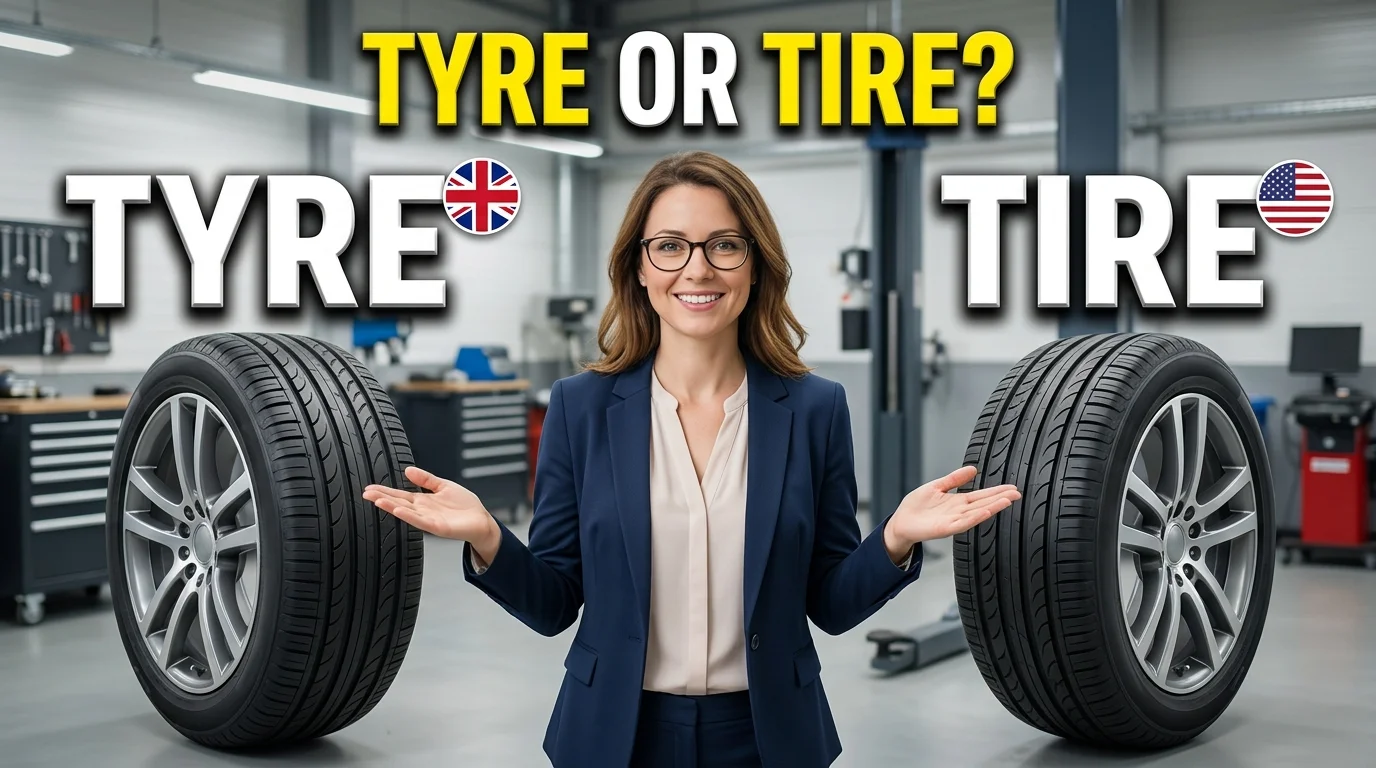
Have you ever written “tyre” or “tire” and wondered which spelling is correct? You are not alone. These two words often confuse English learners, bloggers, students, and even native speakers because they look different but usually refer to the same thing.
The good news is that both spellings are correct, the right choice depends on the type of English you are using.
Understanding tyre or tire is especially useful when writing for UK and US audiences. British English generally uses tyre for the rubber covering around a vehicle’s wheel, while American English uses tire. Although the meaning remains the same, choosing the spelling that matches your audience makes your writing clearer, more professional, and easier to understand.
Quick Answer: Tyre or Tire?
“Tyre” is the standard British English spelling, while “tire” is the standard American English spelling when referring to the rubber covering on a vehicle’s wheel.
For example:
- UK: I need to replace my car’s tyres.
- US: I need to replace my car’s tires.
However, tire is also a correct English word with another meaning: to become tired or to make someone tired. That meaning uses tire in both British and American English.
Meaning of Tyre or Tire
The word tyre or tire usually refers to a ring-shaped covering made from rubber or a similar material. It fits around a wheel and helps a vehicle move safely and smoothly on the road.
A tyre or tire is an important part of many vehicles, including:
- Cars
- Motorcycles
- Bicycles
- Buses
- Trucks
- Tractors
- Aeroplanes
Although people often use the word when discussing cars, the term applies to many types of wheels.
What Does “Tyre” Mean in British English?
In British English, tyre is the usual spelling for the rubber covering around a wheel.
For example:
My front tyre has lost some air.
The mechanic checked all four tyres.
These winter tyres provide better grip on icy roads.
The spelling tyre is common in the United Kingdom and is also widely used in other varieties of English influenced by British usage, including Australian and New Zealand English.
What Does “Tire” Mean in American English?
In American English, tire is the standard spelling for the same vehicle component.
For example:
My front tire has lost some air.
The mechanic checked all four tires.
These winter tires provide better grip on icy roads.
Therefore, tyre and tire have the same meaning when they describe a vehicle’s wheel covering. The main difference is regional spelling.
Is “Tyre” or “Tire” a Noun?
Yes. When the word refers to a wheel covering, it functions as a noun.
A noun names a person, place, thing, or idea. In this case, tyre/tire names a physical object.
Examples:
- The tyre is damaged. (UK)
- The tire is damaged. (US)
- We bought four new tyres. (UK)
- We bought four new tires. (US)
Is “Tyre” or “Tire” a Verb?
Tire is also a verb in both British and American English. However, this verb does not mean a vehicle’s wheel covering.
As a verb, tire means:
- To become tired.
- To make someone tired.
- To lose interest or patience in something.
Examples:
I tire easily after a long walk.
The children tired after playing all afternoon.
She never tires of reading.
In British English, tire is still the correct spelling for this verb. The spelling tyre is not used for this meaning.
Meaning of the Incorrect Form (If Any)
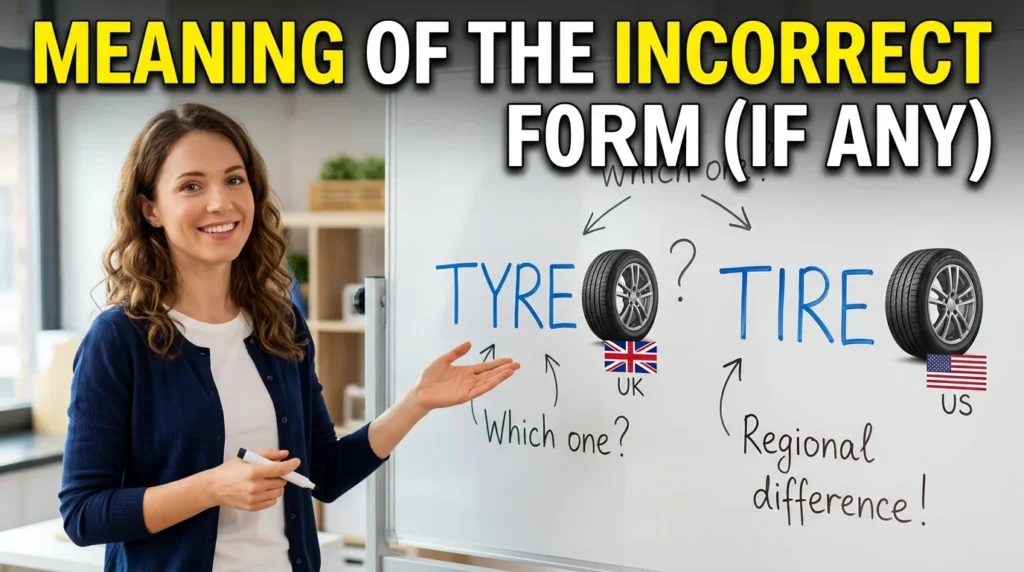
When discussing vehicle wheels, neither “tyre” nor “tire” is incorrect by itself. The spelling becomes incorrect only when it does not match the English variety or style you are expected to use.
For example, if you are writing in British English, tyre is the standard spelling. If you are writing in American English, tire is the standard spelling.
Is “Tyre” Incorrect?
No. Tyre is not an incorrect spelling. It is the standard British English form of the word for a vehicle’s wheel covering.
Correct in British English:
The car needs new tyres.
Less suitable for consistent British English:
The car needs new tires.
The second sentence is understandable, but it uses the American spelling.
Is “Tire” Incorrect?
No. Tire is not incorrect. It is the standard American English spelling for the vehicle component.
Correct in American English:
The car needs new tires.
Less suitable for consistent American English:
The car needs new tyres.
Again, the meaning is clear, but the spelling does not match the usual American style.
Why Do People Think One Form Is Wrong?
Many people learn one variety of English first. As a result, they may see the other spelling and assume it is a mistake.
For example:
- A British reader may expect tyre.
- An American reader may expect tire.
- A learner may see both forms online and become confused.
However, English often has regional spelling differences. Similar examples include:
- Colour (UK) / Color (US)
- Centre (UK) / Center (US)
- Organise (UK) / Organize (US)
- Travelling (UK) / Traveling (US)
Therefore, tyre or tire is a spelling variation, not a difference in the object itself.
Tyre vs Tire: Key Differences
The most important difference between tyre and tire is the variety of English in which each spelling is preferred.
| Feature | Tyre | Tire |
| Main regional use | British English | American English |
| Meaning as a noun | Rubber covering around a wheel | Rubber covering around a wheel |
| Meaning as a verb | Not used for this meaning | To become or make tired |
| Plural form | Tyres | Tires |
| Common example | The tyre is flat. | The tire is flat. |
| Standard in UK writing | Yes | No, unless quoting or following another style |
| Standard in US writing | No, unless using British style | Yes |
The Main Difference Is Spelling, Not Meaning
When you talk about a vehicle, both words describe the same object.
British English:
The tyre needs replacing.
American English:
The tire needs replacing.
The object does not change. Only the spelling changes.
The Plural Forms Are Different
The plural of tyre is tyres, while the plural of tire is tires.
UK examples:
- One tyre
- Two tyres
- Four tyres
US examples:
- One tire
- Two tires
- Four tires
A common mistake is to use tyres in an American sentence or tires in a British sentence when the writer wants consistent regional spelling.
The Verb “Tire” Is Used in Both Varieties
This is an important point. Even British English uses tire as a verb.
Correct in both UK and US English:
I tire after several hours of driving.
The long journey tired everyone.
She never tires of that song.
So, remember:
- Tyre = vehicle wheel covering in British English.
- Tire = vehicle wheel covering in American English.
- Tire = become tired or make tired in both varieties.
Why Does British English Use “Tyre” and American English Use “Tire”?
The difference developed through the history of English spelling. British and American English gradually adopted different spelling conventions, especially during the development of American dictionaries and written standards.
American English often simplified or regularised certain spellings. For example, it commonly uses color instead of colour and center instead of centre. The spelling tire became the standard American form for the vehicle component.
British English retained tyre for that meaning, helping distinguish it visually from the verb tire.
However, the distinction is not absolute in every historical or regional context. Older texts, brand names, and international publications may use different spellings. Modern standard usage is still straightforward: tyre in British English and tire in American English.
Common Mistakes People Make
Even though the difference is simple, writers often make mistakes when switching between UK and US English. Here are some of the most common ones.
1. Mixing British and American Spellings
A writer may use tyre in one sentence and tire in another without a reason.
Inconsistent example:
The front tyre is worn, but the rear tire is new.
This is not always grammatically wrong, but it can make your writing look inconsistent.
Better UK version:
The front tyre is worn, but the rear tyre is new.
Better US version:
The front tire is worn, but the rear tire is new.
2. Thinking “Tyre” Is Always Correct
Some learners believe tyre is the original or more correct spelling everywhere. That is not true.
American English uses “tire” as the standard spelling for the vehicle component. Therefore, an American article about car maintenance should normally use tire, not tyre.
3. Thinking “Tire” Is Always Correct
The opposite mistake also happens. Some people assume tire is the only correct spelling because it is common online.
However, tyre is the standard British English spelling. If you are writing for a UK audience, using tyre is usually the better choice.
4. Using “Tyre” for the Verb
This is a more important mistake because it changes the meaning.
Incorrect:
I tyre after a long day.
Correct:
I tire after a long day.
The verb is always spelled tire in standard British and American English.
5. Confusing “Tyre” With “Tire” in a Brand Name
Some companies use one spelling even when they operate internationally. A business name, product name, or quoted title should generally retain its official spelling.
For example, if a company uses Tyre Services in its official name, do not automatically change it to Tire Services for an American reader. Proper names follow their own spelling conventions.
6. Changing the Spelling in a Direct Quote
If you quote someone or reproduce a title, keep the original spelling unless you clearly indicate an editorial change.
Example:
The article was titled “How to Choose the Right Tyre.”
Even an American publication may preserve the original title if it comes from a British source.
Correct Usage in Sentences
The easiest way to understand tyre or tire is to see both forms in real-life sentences.
British English Examples
- I need to check the pressure in my car’s tyres.
- The mechanic replaced the damaged tyre.
- These winter tyres improve traction in cold weather.
- My bicycle tyre has a puncture.
- The front tyre looks slightly worn.
- The garage sells tyres for cars, vans, and motorcycles.
- I noticed a nail stuck in the rear tyre.
- The driver checked the tyres before starting the journey.
- A flat tyre can make driving dangerous.
- The manufacturer recommends replacing old tyres.
American English Examples
- I need to check the pressure in my car’s tires.
- The mechanic replaced the damaged tire.
- These winter tires improve traction in cold weather.
- My bicycle tire has a puncture.
- The front tire looks slightly worn.
- The shop sells tires for cars, vans, and motorcycles.
- I noticed a nail stuck in the rear tire.
- The driver checked the tires before starting the journey.
- A flat tire can make driving dangerous.
- The manufacturer recommends replacing old tires.
Examples Using “Tire” as a Verb
These examples are correct in both British and American English:
- I tire after walking for several hours.
- The long journey tired the children.
- She never tires of learning new things.
- Do not let the difficult work tire you.
- He began to tire of the repeated arguments.
- The heavy exercise tired my legs.
- We may tire if we continue without a break.
Notice that these sentences do not refer to wheels. They use tire to describe tiredness or loss of energy.
Tyre or Tire in Different Contexts
The correct spelling can also depend on the context in which you are writing.
Car Maintenance
UK:
Check your tyres before a long journey.
US:
Check your tires before a long trip.
Both sentences communicate the same advice.
Automotive News
UK:
The company has launched a new range of performance tyres.
US:
The company has launched a new range of performance tires.
Bicycle Discussions
UK:
I bought a new mountain-bike tyre.
US:
I bought a new mountain-bike tire.
Technical Writing
When writing technical documents, consistency matters. Choose the spelling that matches your publication’s style guide, target audience, or regional standard.
For example:
- A UK repair manual should normally use tyre.
- A US repair manual should normally use tire.
- An international website may choose one spelling and explain the difference.
SEO and Website Content
If you are writing an article for search engines, both tyre and tire can be valuable keywords. However, your primary spelling should match your intended audience.
For example:
- A UK-focused article may target “tyre pressure,” “car tyres,” and “best tyres.”
- A US-focused article may target “tire pressure,” “car tires,” and “best tires.”
If your website serves both audiences, you can naturally mention both forms in the introduction or a dedicated comparison section. Avoid stuffing both spellings into every sentence because that can make the article sound unnatural.
Tyre or Tire in UK and US Phrases
Some phrases commonly appear with the word tyre/tire. The spelling changes according to the regional variety, but the meaning stays the same.
| British English | American English |
| Tyre pressure | Tire pressure |
| Tyre replacement | Tire replacement |
| Tyre shop | Tire shop |
| Tyre repair | Tire repair |
| Tyre tread | Tire tread |
| Tyre manufacturer | Tire manufacturer |
| Tyre size | Tire size |
| Tyre marks | Tire marks |
| Tyre fitting | Tire installation / Tire fitting |
| Tyre dealer | Tire dealer |
Examples in Context
UK:
The garage offers affordable tyre repair services.
US:
The shop offers affordable tire repair services.
UK:
Check the tyre pressure before driving.
US:
Check the tire pressure before driving.
The difference is mainly spelling. Some related terms, such as fitting and installation, may also vary by region, but tyre/tire remains the key distinction.
How to Choose the Right Spelling
Choosing between tyre and tire becomes easy when you consider your audience.
Use “Tyre” When:
- You are writing in British English.
- Your audience is mainly in the UK.
- You are following a British style guide.
- You are discussing UK automotive products or services.
- You want consistency with words such as colour, centre, and organise.
Example:
Our garage provides professional tyre replacement services.
Use “Tire” When:
- You are writing in American English.
- Your audience is mainly in the United States.
- You are following an American style guide.
- You are discussing US automotive products or services.
- You are using the verb meaning “to become tired.”
Example:
Our shop provides professional tire replacement services.
What If Your Audience Is International?
If your readers come from both the UK and the US, you have a few options:
- Choose one spelling and remain consistent.
- Mention both spellings naturally.
- Use the spelling that matches your main target audience.
- Explain the difference briefly when it matters.
For example:
In British English, the word is spelled tyre, while American English uses tire. Both refer to the rubber covering around a vehicle’s wheel.
This one sentence helps readers understand the difference without interrupting the article.
Easy Tips to Remember Tyre or Tire
Here are some simple memory tricks to help you remember the correct spelling.
Tip 1: Think “UK = Tyre”
The spelling tyre is associated with British English.
Memory trick:
Tyre = UK road vocabulary
Whenever you are writing for a British audience, remember tyre.
Tip 2: Think “US = Tire”
The spelling tire is associated with American English.
Memory trick:
Tire = US spelling
This is the easiest way to remember the regional difference.
Tip 3: Remember That the Verb Is Always “Tire”
If the word means to become tired, use tire in both varieties of English.
Example:
I tire after a long day.
Do not use tyre for this meaning.
Tip 4: Match the Plural to the Singular
- Tyre → Tyres
- Tire → Tires
If you choose tyre, use tyres. If you choose tire, use tires.
Tip 5: Look at the Rest of Your Spelling
If your article uses:
- Colour
- Centre
- Organise
- Travelling
then tyre will usually fit your British English style.
If your article uses:
- Color
- Center
- Organize
- Traveling
then tire will usually fit your American English style.
Tip 6: Check the Meaning Before Choosing
Ask yourself:
Am I talking about a wheel covering or tiredness?
- Wheel covering → tyre (UK) or tire (US)
- Becoming tired → tire (both UK and US)
This simple question prevents many mistakes.
Tyre or Tire in Formal and Informal Writing
Both spellings are acceptable in their appropriate regional varieties, but consistency is especially important in formal writing.
Formal Writing
In reports, essays, manuals, and business documents, use the spelling that matches your chosen style.
British formal example:
The inspection revealed uneven wear on the vehicle’s front tyres.
American formal example:
The inspection revealed uneven wear on the vehicle’s front tires.
Informal Writing
In texts, social media posts, and casual conversations, people may use either spelling depending on where they live.
UK text:
My tyre is flat again!
US text:
My tire is flat again!
Neither sentence is wrong in its intended regional context.
Academic Writing
Students should follow the spelling conventions required by their school, university, or instructor. If the assignment requires British English, use tyre. If it requires American English, use tire.
The most important rule is to avoid switching styles without a clear reason.
Frequently Asked Questions About Tyre or Tire
1. Is “tyre” or “tire” correct?
Both are correct. Tyre is the standard British English spelling for a vehicle’s wheel covering, while tire is the standard American English spelling.
2. Is “tyre” British or American?
Tyre is British English. It is also common in other varieties influenced by British English, such as Australian and New Zealand English.
3. Is “tire” British or American?
Tire is the standard American English spelling for the rubber covering around a wheel. However, British English also uses tire as a verb meaning “to become tired.”
4. Can I use “tyre” in American English?
You can, but tire is the usual American spelling for the vehicle component. Use tyre if you are following British style, quoting a source, or referring to an official name.
5. Can I use “tire” in British English?
Yes, but when referring to a vehicle’s wheel covering, tyre is the standard British spelling. The word tire is also correct in British English when used as a verb.
6. What is the plural of “tyre”?
The plural of tyre is tyres.
Example:
The car needs four new tyres.
7. What is the plural of “tire”?
The plural of tire is tires.
Example:
The car needs four new tires.
8. Is “tyre” a verb?
No, tyre is not the standard spelling of the verb meaning “to become tired.” The correct verb is tire in both British and American English.
9. Do “tyre” and “tire” sound the same?
Yes. When they refer to a vehicle’s wheel covering, tyre and tire are pronounced the same in standard English. They are homophones, meaning they sound alike but have different spellings.
10. Should I use “tyre” or “tire” for SEO?
Use the spelling that matches your target audience. If you target UK readers, use tyre. If you target US readers, use tire. You serve both audiences, mention both naturally and maintain a consistent primary style.
11. Is “tyre pressure” British English?
Yes. Tyre pressure is the standard British English phrase. In American English, the equivalent phrase is tire pressure.
12. Is “tyres” correct in British English?
Yes. Tyres is the correct plural form of tyre in British English.
Conclusion
So, tyre or tire, which spelling should you use? The answer is simple: tyre is the standard British English spelling, while tire is the standard American English spelling when referring to a vehicle’s wheel covering. Both forms are correct, and neither is universally better than the other.
Remember that tire also works as a verb in both British and American English, meaning “to become tired” or “to make someone tired.” Therefore, always consider the meaning and the audience before choosing a spelling.