Have you ever written a sentence and suddenly wondered, “Should I use since or sense?” You are not alone. These two words sound similar, especially when people speak quickly, but they have completely different meanings and grammatical roles. Choosing the wrong one can change your sentence or make your writing look less polished.
Understanding since or sense is important for both British and American English speakers because these words appear in everyday conversations, school assignments, emails, social media posts, and professional writing. Fortunately, the difference is easier to remember once you understand what each word means and how it works in a sentence.
In this guide, we will explain since and sense in simple English. You will learn their meanings, correct usage, common mistakes, UK and US examples, memory tricks, and answers to frequently asked questions. By the end, you will know exactly which word to choose.
Quick Answer: Since or Sense?
Since is used mainly to talk about time or to explain a reason. For example, “I have lived here since 2020” refers to time, while “Since it was raining, we stayed inside” gives a reason.
Sense is usually a noun or verb related to meaning, understanding, feelings, or the five senses. For example, “That makes sense” means something is understandable, and “I can sense danger” means you can feel or notice it.
Easy rule: If you mean “from a time” or “because,” use since. If you mean “meaning,” “understanding,” “feeling,” or “a sensory ability,” use sense.
Meaning of Since
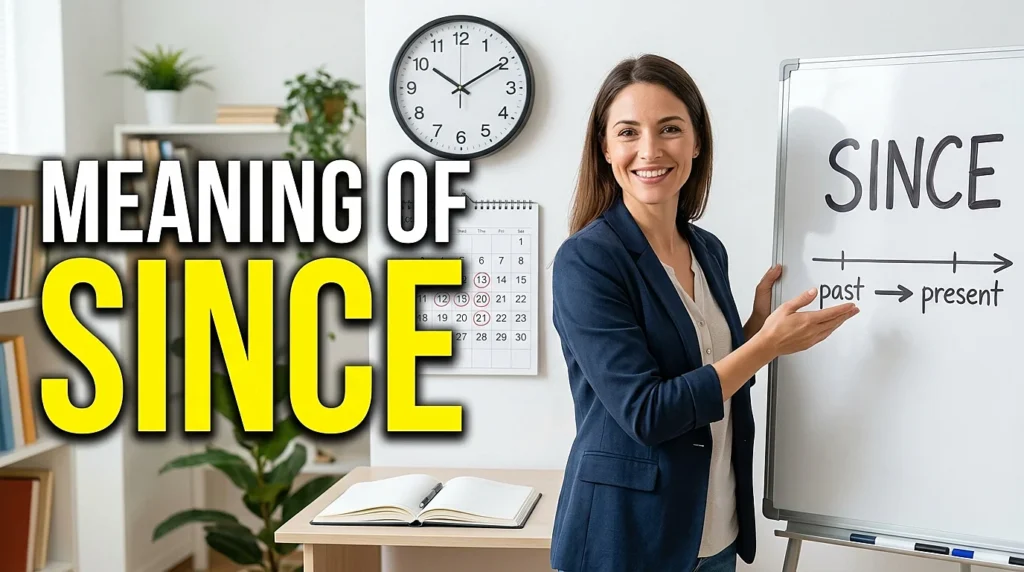
The word since has two main uses in English. It can describe when something started or explain why something happened. The meaning depends on the context.
Since as a Preposition of Time
When since refers to time, it introduces a starting point. It tells us when an action or situation began and often suggests that it continues until now or another time.
For example:
- I have worked here since 2021.
- She has been learning English since Monday.
- We have known each other since childhood.
- He has lived in London since 2018.
In each sentence, since identifies the beginning of a period.
Since with a Specific Point in Time
Use since before a specific time, date, day, year, or event.
| Correct Example | What It Means |
| I have been awake since 6 a.m. | My wakefulness began at 6 a.m. |
| She has studied here since 2022. | Her studies began in 2022. |
| We have been friends since school. | The friendship began during school. |
| He has not called since yesterday. | His last call was yesterday. |
British English example: “I’ve lived in Manchester since 2019.”
American English example: “I’ve lived in Chicago since 2019.”
The grammar is the same in both varieties. Only the location or context changes.
Since with the Present Perfect
One of the most common patterns is:
Subject + have/has + past participle + since + starting point
Examples:
- I have known her since 2015.
- She has worked at the hospital since June.
- They have owned the house since 2008.
- We have used this software since last year.
This structure is common in both British and American English.
British English: “I’ve been waiting since half past eight.”
American English: “I’ve been waiting since eight-thirty.”
Both sentences are correct. The difference is mainly how people commonly express the time.
Since as a Conjunction of Time
Since can also connect two clauses and show that one event began after another.
Examples:
- I have felt happier since I changed jobs.
- She has improved since she started practising.
- We have not visited them since they moved.
- He has become more confident since he joined the team.
Here, since means “from the time that.”
Consider this sentence:
I have been more productive since I started using a planner.
The sentence tells us that productivity improved after the speaker began using a planner.
Since as a Conjunction of Reason
Since can also mean “because” or “as.” In this use, it does not refer to time.
Examples:
- Since you are tired, you should rest.
- Since the shop was closed, we went home.
- Since I had already eaten, I skipped dinner.
- Since the weather was bad, the match was cancelled.
In these sentences, since introduces a reason.
British English example: “Since the train was delayed, I arrived late.”
American English example: “Since the traffic was heavy, I got to work late.”
Again, the word works the same way in both varieties.
How to Identify Time vs Reason
Ask yourself what since is doing in the sentence.
- If it answers “From when?”, it refers to time.
- If it answers “Why?”, it refers to a reason.
Compare:
- I have lived here since 2020. → From when have I lived here? 2020.
- Since it was cold, I wore a jacket. → Why did I wear a jacket? Because it was cold.
This simple question can help you understand the meaning quickly.
Meaning of Sense
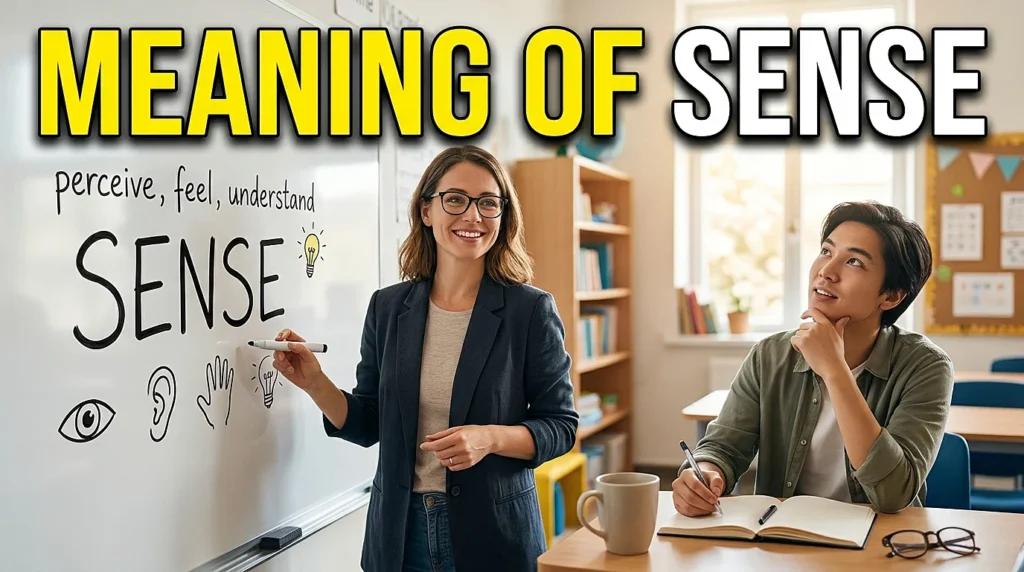
The word sense has several meanings, but they are all connected to understanding, perception, or meaning. It can function as a noun or a verb.
Sense as a Noun: Meaning or Understanding
When sense means meaning or understanding, it often appears in the expression “make sense.”
Examples:
- That explanation makes sense.
- Your answer does not make sense.
- It makes sense to leave early.
- I understand what you mean; that makes sense.
If something is logical or understandable, it makes sense.
Incorrect: That makes since. Correct: That makes sense.
Sense as a Noun: A Physical Ability
Sense can refer to one of the five physical abilities:
- Sight
- Hearing
- Smell
- Taste
- Touch
Examples:
- Dogs have an excellent sense of smell.
- My sense of hearing is sensitive.
- The five senses help us understand the world.
- She lost her sense of taste after the illness.
The plural form is senses.
British English example: “The garden appeals to all five senses.”
American English example: “The restaurant’s smell awakened my sense of taste.”
Sense as a Noun: Good Judgment
Sense can also mean practical judgment or wisdom.
Examples:
- Use your common sense.
- She has a strong sense of responsibility.
- He showed good sense by saving money.
- It would be sensible to check the details first.
The phrase common sense is especially common in both UK and US English.
Correct: Use your common sense. Incorrect: Use your common since.
Sense as a Noun: A Feeling or Awareness
Sometimes sense means an internal feeling or awareness.
Examples:
- I had a sense that something was wrong.
- She felt a sense of relief.
- He experienced a strong sense of belonging.
- There was a sense of excitement in the room.
In these examples, sense refers to an impression or feeling rather than a physical sense.
Sense as a Noun: A Meaning or Interpretation
The word sense can also describe a particular meaning of a word, phrase, or situation.
Examples:
- What sense of the word are you using?
- In this sense, the statement is correct.
- The word has several senses.
- I understand the literal sense of the sentence.
This use is common in dictionaries, grammar discussions, and academic writing.
Sense as a Verb: To Feel or Notice
As a verb, sense means to notice or feel something, sometimes without directly seeing or hearing it.
Examples:
- I could sense that she was upset.
- The dog sensed danger.
- He sensed a change in the atmosphere.
- She can sense when someone is nervous.
The verb changes normally:
- Present: sense
- Past: sensed
- Present participle: sensing
British English example: “I sensed that the meeting would be difficult.”
American English example: “I sensed that something unusual was happening.”
Sense in Common Expressions
You will often see sense in these expressions:
- Make sense — be understandable or logical
- Common sense — practical judgment
- A sense of humour / humor — the ability to appreciate jokes
- A sense of direction — the ability to know where you are going
- A sense of responsibility — awareness of duties
- A sense of belonging — feeling accepted
- In a sense — in one way or from one viewpoint
- Sense of smell — ability to detect smells
Notice the spelling difference in one expression:
- British English: sense of humour
- American English: sense of humor
However, the word sense remains the same in both.
Since or Sense: Key Differences
Although since and sense sound alike, they differ in meaning, grammar, and usage.
| Feature | Since | Sense |
| Main meaning | From a time; because | Meaning, understanding, feeling, or perception |
| Common word class | Preposition or conjunction | Noun or verb |
| Refers to time? | Yes | No |
| Can mean “because”? | Yes | No |
| Can mean “understanding”? | No | Yes |
| Common expression | Since 2020 | Make sense |
| Example | I have lived here since 2020. | That makes sense. |
Since vs Sense in Simple Sentences
Compare these examples:
- Since Monday, I have felt better. → This refers to time.
- I have a good sense of direction. → This refers to an ability.
- Since it was late, we left. → This gives a reason.
- Your explanation makes sense. → This means your explanation is understandable.
The spelling changes because the meanings change.
Since and Sense Are Not Interchangeable
You cannot replace one with the other simply because they sound similar.
Incorrect: I have lived here sense 2020. Correct: I have lived here since 2020.
Incorrect: That does not make since. Correct: That does not make sense.
Incorrect: Sense you are here, let’s begin. Correct: Since you are here, let’s begin.
Incorrect: I can since something is wrong. Correct: I can sense something is wrong.
Are Since and Sense Homophones?
Yes. Since and sense are commonly treated as homophones because they are pronounced the same in standard English, even though they have different spellings and meanings.
A homophone is a word that sounds like another word but has a different meaning or spelling.
Other examples include:
- There / their / they’re
- To / too / two
- Right / write
- Hear / here
- Peace / piece
Since and sense belong to this same group.
Why Do They Sound the Same?
In most standard British and American accents, both words are pronounced approximately:
/sɪns/
The spelling does not tell you the meaning when you hear the words. Therefore, you must use the sentence’s context to decide which word belongs in writing.
For example, if someone says:
“That makes sense.”
You know they mean understanding, so the correct spelling is sense.
If someone says:
“I have lived here since 2010.”
You know they mean time, so the correct spelling is since.
Common Mistakes People Make
Because since and sense sound identical, many writers confuse them. Here are the most common mistakes and how to correct them.
Mistake 1: Using Sense for Time
Incorrect: I have worked here sense 2020. Correct: I have worked here since 2020.
Why? The sentence gives a starting point in time. Therefore, use since.
More examples:
- Incorrect: She has been absent sense Monday.
- Correct: She has been absent since Monday.
- Incorrect: We have known him sense childhood.
- Correct: We have known him since childhood.
Mistake 2: Using Since for Meaning
Incorrect: That explanation does not make since. Correct: That explanation does not make sense.
Why? The expression make sense means “be understandable.” It always uses sense.
More examples:
- Incorrect: Your plan makes since.
- Correct: Your plan makes sense.
- Incorrect: This rule does not make since.
- Correct: This rule does not make sense.
Mistake 3: Confusing Sense with the Reason Meaning of Since
Incorrect: Sense you are ready, we can start. Correct: Since you are ready, we can start.
Why? Here, since means because. It introduces a reason.
More examples:
- Incorrect: Sense it was raining, we stayed home.
- Correct: Since it was raining, we stayed home.
- Incorrect: Sense I finished early, I helped my colleague.
- Correct: Since I finished early, I helped my colleague.
Mistake 4: Confusing the Verb Sense with Since
Incorrect: I can since that he is worried. Correct: I can sense that he is worried.
Why? The verb sense means to notice or feel something.
More examples:
- Incorrect: She since something unusual.
- Correct: She sensed something unusual.
- Incorrect: We could since tension in the room.
- Correct: We could sense tension in the room.
Mistake 5: Writing “Make Since”
The phrase make sense is so common that learners sometimes spell it incorrectly.
Incorrect: Does that make since? Correct: Does that make sense?
This mistake is especially common in texting, informal messages, and fast writing.
Mistake 6: Misunderstanding “Since” at the Beginning of a Sentence
Sometimes writers think since always refers to time. However, it can also introduce a reason.
Compare:
- Since 2020, I have lived here. → Time
- Since you are here, I will explain it. → Reason
The surrounding words tell you which meaning applies.
Correct Usage in Sentences
The following examples show how since and sense work in everyday British and American English.
Examples of Since for Time
- I have lived in Birmingham since 2018. (British English)
- She has worked in Boston since 2021. (American English)
- We have been friends since school.
- He has not eaten since breakfast.
- They have owned the shop since last summer.
- I have been learning Spanish since January.
- She has felt better since her appointment.
- We have used this method since the beginning of the project.
- He has played football since he was six.
- I have not seen them since last week.
Examples of Since for Reason
- Since you are busy, I will call later.
- Since the weather was cold, we stayed indoors.
- Since I had no cash, I paid by card.
- Since the road was closed, we took another route.
- Since she had already finished, she left early.
- Since the shop was full, we waited outside.
- Since you asked, I will explain the difference.
- Since the deadline is tomorrow, we should begin now.
- Since he was feeling ill, he stayed home.
- Since the instructions were unclear, we asked for help.
Examples of Sense as a Noun
- That explanation makes sense.
- Use your common sense.
- I have a strong sense of direction.
- She has a good sense of humour. (British English)
- He has a good sense of humor. (American English)
- The dog has an excellent sense of smell.
- I had a sense that someone was watching.
- This word has a different sense in that sentence.
- She felt a sense of relief after the exam.
- The story does not make sense.
Examples of Sense as a Verb
- I could sense that he was nervous.
- She sensed something was wrong.
- The dog can sense danger.
- He sensed a change in the atmosphere.
- We could sense excitement in the crowd.
- She can sense when someone is upset.
- I sensed that the plan needed more work.
- The child sensed tension between the adults.
- They sensed an opportunity and acted quickly.
- He sensed that the conversation was ending.
UK and US English: Are There Any Differences?
The words since and sense have the same meanings and spelling in both British and American English. You do not need to learn separate versions of these words.
However, the surrounding vocabulary or spelling may differ.
British English Examples
- I have lived here since 2019.
- Since the lorry was late, the delivery arrived after lunch.
- That makes sense.
- She has a good sense of humour.
- I can sense that something is wrong.
American English Examples
- I have lived here since 2019.
- Since the truck was late, the delivery arrived after lunch.
- That makes sense.
- She has a good sense of humor.
- I can sense that something is wrong.
Important Differences to Remember
| British English | American English |
| Sense of humour | Sense of humor |
| Lorry | Truck |
| At the weekend | On the weekend |
| Maths | Math |
These differences do not change the correct spelling of since or sense.
Is “Since” Used Differently in the UK and US?
Not in its basic meaning. Both varieties use since for time and reason.
For example:
- British: “I’ve been here since Monday.”
- American: “I’ve been here since Monday.”
Both are correct.
There can be small differences in style or preferred sentence structure, but the grammar of since remains consistent.
Since vs For: A Related Grammar Difference
Many learners who confuse since and sense also confuse since and for. These words are different, but understanding them can improve your time-related grammar.
Use Since for a Starting Point
Since tells us when something began.
- since 2020
- since Monday
- since breakfast
- since last summer
- since I moved here
Examples:
- I have worked here since 2020.
- She has been tired since Monday.
Use For for a Duration
For tells us how long something has continued.
- for five years
- for two hours
- for three days
- for a long time
- for several months
Examples:
- I have worked here for five years.
- She has been tired for two days.
Compare Since and For
| Since | For |
| Since 2020 | For six years |
| Since Monday | For three days |
| Since breakfast | For two hours |
| Since childhood | For many years |
Correct: I have lived here since 2020. Correct: I have lived here for six years.
Incorrect: I have lived here since six years. Incorrect: I have lived here for 2020.
Easy Way to Remember
- Since = starting point
- For = length of time
This distinction is useful in both British and American English.
Tips to Remember Since or Sense
If you often confuse these words, a few simple memory tricks can help.
Tip 1: Remember “Since” Starts with S for Starting Point
Think:
Since = Starting point
Examples:
- since Monday
- since 2020
- since breakfast
If the sentence gives a starting time, choose since.
Tip 2: Remember “Sense” Is Connected to the Senses
Think of the five senses:
- Sight
- Hearing
- Smell
- Taste
- Touch
This helps you remember that sense relates to perception, feeling, and understanding.
Tip 3: Memorise “Make Sense”
The phrase make sense is always spelled with sense.
Examples:
- That makes sense.
- Does this make sense?
- It does not make sense.
- Your explanation makes perfect sense.
Whenever you see make, does, or does not in this expression, remember sense.
Tip 4: Ask “Time, Reason, or Meaning?”
Before writing the word, ask:
- Is it about time? → since
- Does it mean because? → since
- Does it mean meaning or understanding? → sense
- Does it refer to a feeling or ability? → sense
This question works in most everyday situations.
Tip 5: Use the “Because” Test
If you can replace since with because, it is probably the correct word.
Example:
Since it was raining, we stayed inside.
Replace it:
Because it was raining, we stayed inside.
The meaning remains clear, so since is correct.
However, this test does not work for time-related sentences:
I have lived here since 2020.
You cannot replace since with because. Here, since refers to time.
Tip 6: Read the Sentence Aloud, Then Check the Meaning
Because since and sense sound alike, pronunciation alone will not help you choose the spelling. Instead, read the sentence and identify its meaning.
For example:
Your idea makes ___.
The meaning is “understandable,” so the answer is sense.
I have worked here ___ 2022.
The meaning is “from 2022,” so the answer is since.
Tip 7: Create Your Own Examples
Write two sentences using each word:
- I have lived here since 2021.
- Since it was late, we left.
- That makes sense.
- I can sense something unusual.
Practising these patterns makes the difference easier to remember.
Practice Quiz: Since or Sense?
Choose the correct word in each sentence.
- I have known her ___ childhood.
- That does not make ___.
- ___ you are ready, we can begin.
- I can ___ that something is wrong.
- She has worked here ___ June.
- Use your common ___.
- ___ the shop was closed, we went home.
- The dog has a strong ___ of smell.
- I have not seen him ___ Monday.
- Your explanation makes perfect ___.
Answers
- since — starting point in time
- sense — understanding
- Since — because
- sense — verb meaning notice or feel
- since — starting point in time
- sense — practical judgment
- Since — because
- sense — physical ability
- since — starting point in time
- sense — understanding
FAQs About Since or Sense
1. What is the main difference between since and sense?
Since usually refers to time or gives a reason. Sense refers to meaning, understanding, feelings, or perception. For example, “I have lived here since 2020” uses since, while “That makes sense” uses sense.
2. Is “That makes since” correct?
No. The correct expression is “That makes sense.” Here, sense means that something is logical or understandable.
3. Is “I have lived here sense 2020” correct?
No. The correct sentence is “I have lived here since 2020.” Use since before a specific starting point in time.
4. Can since mean because?
Yes. Since can introduce a reason and mean because or as.
Example:
Since it was raining, we stayed home.
This means:
Because it was raining, we stayed home.
5. Can sense be a verb?
Yes. As a verb, sense means to notice, feel, or become aware of something.
Example:
I could sense that she was nervous.
6. Are since and sense pronounced the same?
Yes. In standard British and American English, they are commonly pronounced the same. They are homophones, but their meanings and spellings are different.
7. Is the spelling of since or sense different in British and American English?
No. Both varieties spell these words the same way. However, related words may differ, such as humour in British English and humor in American English.
8. Should I use since or for with a year?
Use since with a starting year.
Correct: I have lived here since 2020.
Use for with a duration.
Correct: I have lived here for six years.
9. What does “make sense” mean?
Make sense means to be understandable, logical, or reasonable.
Example:
Your explanation makes sense.
This means the explanation is clear and logical.
10. How can I remember the difference between since and sense?
Remember:
- Since = Starting point or because
- Sense = Senses, meaning, or understanding
Also, memorise the common phrase “make sense.”
Conclusion
In conclusion, since and sense are both correct words, but they have different meanings and uses. Since refers to a point in time or explains a reason. For example, “I have lived here since 2020” or “Since it was raining, we stayed home.” Sense, on the other hand, refers to a feeling, understanding, or ability to recognize something, such as sight, hearing, or touch.
For example, “That idea makes sense.” Remember to use since when discussing time or reasons and sense when referring to meaning or perception. Understanding this difference helps you avoid common spelling mistakes and improve your writing.